
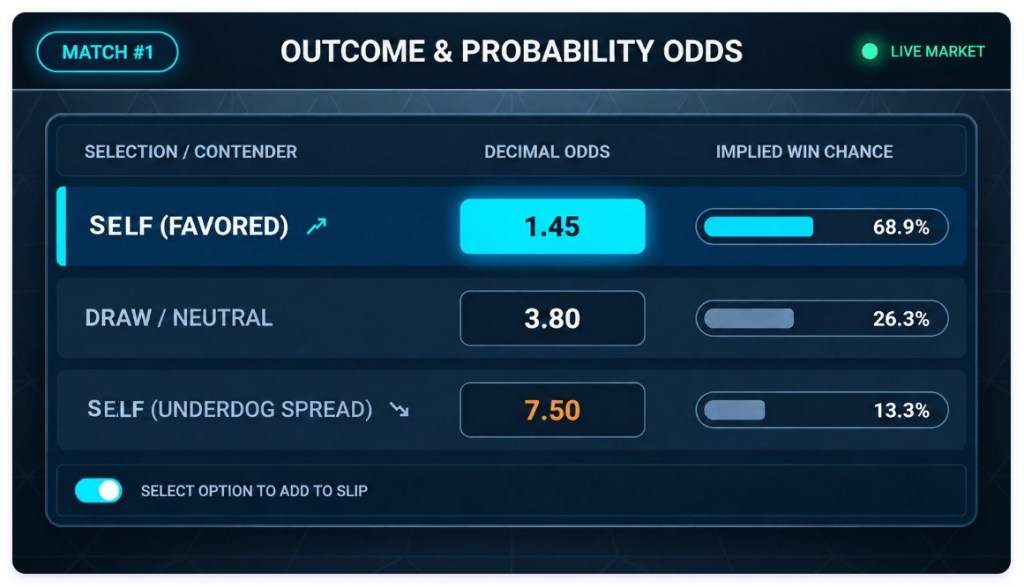
Payday came later – as it always does – in this case, about four years later.
It took about five minutes. Only five minutes. Five minutes is just a drop in the bucket.
Relax.
That’s what I thought when I was nineteen. The bucket was huge, and there were lots of
drops left to drip. I could spend a few more minutes in the dorm common room hanging out
with my buddies instead of studying chemistry, and I could play a few extra minutes of
hockey on the outdoor rink instead of heading back to attack a math assignment.
I was 99.9% right – it was just a few minutes, and there were lots more to come.
An hour later, I was down to being 99.7% right. That’s still a lot of certainty. Still a good bet
to make.
But if you’re betting on a team, a horse or a stock, momentum and direction factor into the
equation too. And the trend was not my friend. I didn’t realize it, but I was losing about 1%
of my potential every four hours.
I was young, and I knew nothing of the compound effect. It still looked like a good bet. I
could make it for days, even weeks, and still expect to win.
[The math here is straightforward: a 15- to 16-week semester, with an average of four hours a
day of study time available to you, gives you about 5,000 five-minute periods. Each hour is
worth about 0.25%, so each four-hour block you don’t use is about 1%. Or, in even simpler
terms, a semester is roughly 100 days, and each day you don’t study, or go through the
motions and stick to what you already know, knocks about 1% off your odds of mastering the
subject.]
That was my strategy. And I fared all right – for the most part. I could squeak out a decent
mark much of the time. I even enjoyed the pressure of those last-minute, night-before study
sessions. I relished the challenge of putting my ability to separate the signal from the noise
to the test, learning the essential elements of a subject in a fraction of the time expected.
At times the learning curve was steep, but I was a quick learner. I was The Little Engine
That Could, and I used willpower to get the job done.
But there’s another children’s tale that’s relevant to this story. Often, sitting next to me in
those science classes were keeners who dreamt of becoming doctors. I never watched ER,
or whatever TV show of the day portrayed emergency-room heroics and torrid love affairs.
I never really watched TV, and I had only a vague notion that these were demanding and
prestigious careers. To me, doctor conjured the image of an old guy in a white coat in a drab
building, holding a stethoscope to the chest of a kid with a runny nose. Not my idea of an
exciting career. Besides, blood made me queasy – or so I thought. (Years later I realized that
I only cared when it was my blood gushing out of my body. Other people’s blood spurs me
to action. While pursuing studies in the medical sciences, I performed surgeries on live
animals and removed organs with no problem. I had myself all wrong.)
But I digress. The point is: they had a purpose, and therefore a different strategy. The
purpose may have been status, the security of a lucrative job, pleasing their parents, or a
genuine desire to learn and help people. It makes no difference why. The point is that they
cared about the finish line and could imagine themselves crossing it. They were tortoises.
To them, a five-minute head start was an advantage not to be squandered.
In learning, there are hills that can’t be climbed in a day – some subjects are too
conceptually dense to absorb the night before. I finally ran into the wall I’d been speeding
toward. I got a taste of failure. But I’m no dummy. Genius-boy figured that if one night of cramming got me 45% on one exam, I’d attack the next with a whole new strategy. Two nights of cramming: 90%, pretty much guaranteed…
The math isn’t that simple with complex problems and subjects.
The compound effect works through regular deposits in your knowledge bank.
Compounding isn’t linear. The gains nearly all come at the end, and the foundation built by
slow, steady deposits is what makes them possible.
Save a measly dollar and earn ten percent, and you’re still broke. Save a million and earn
ten percent, and you’ve just out-earned most of the people in your country by doing almost
nothing.
That’s why it takes ten years to become an overnight success. The great work, the threshold
crossed, the promotion you get in year ten might have taken six months or a year to earn,
but your ability to do it rests on the previous years of effort.
The magic of compound interest is often drawn as a hockey-stick curve: slow growth that
leads to rapid acceleration. We talk less about the fact that the hockey stick can point
downward too. Build no foundation, and you can lose ground just as quickly. With every
five-minute segment, I was losing momentum fast.
Unfortunately, my ego was growing. The successes I did manage to eke out did more harm
than good. I convinced myself that I knew what I was doing. Worse, others noticed how far I
could get with my last-minute sprints, and I began to build an identity around it.
We all know the fate of the overconfident hare. In learning, it’s better to be a tortoise with
the hare’s confidence (or the little engine’s self-talk), or a hare – one who isn’t
overconfident – with the tortoise’s work ethic. (A few too many mixed metaphors there, but
you get my point.)
Four years later, I had to think hard about my future. And guess what intrigued me? Among
other things, medical school. Not because I suddenly cared about status (like all of us, I
have false idols and play the status game, just different ones), but because I loved learning
how our physiology works and what keeps us well.
My grades and habits had improved drastically by then, but I had to accept that I’d fallen
out of contention on those fall evenings some four years earlier, when I placed my bets.
This is life we’re talking about, not chess. It isn’t checkmate, game over. I made something
of the avenues still open to me, and it’s possible – maybe even likely – that things worked
out for the best. But would you rather have options, or be painted into a corner? Life is
much better as a chooser than as a beggar.
When we’re young and full of potential, and the world has so much to offer, is the best time
to open doors. To have those doors open wide for us, we must learn to choose ourselves.
Otherwise, we’re stuck with what life hands us, which might not be much.
Looking back, when I think of anything (material or immaterial) I lament not having right
now, or not having yet, the deciding factor was usually me – not the economy, the
competition, my parents, the weather or some evil dictator. The world always has
something to say about what happens to you, but a big part of the equation is how much
you’re willing to bet on yourself.
Think about the bet you’re about to make. It may not seem like it, but how rich, powerful,
popular, fit or smart you’ll be (pick your idol) in a few months or a few years depends on
what you do in the next five minutes. At every moment, you’re placing a bet. And unlike
betting on sports or at the casino, in this arena the bet itself changes the odds. You are the
house, and in the long run, the house always wins.
This is one of the most important lessons of my life so far. You want to rig the game so the
odds are in your favour, through hard work, patience and positioning. Betting against
yourself rigs the game too – the wrong way. (That’s why athletes aren’t allowed to bet on
their own games.) Is the guaranteed ego boost of being right about not being good enough
worth as much as the potential boost of getting better?
So you think you can take it easy for the next five minutes, the next hour, or the whole day?
That might be a good bet; you’re probably 99.9% right. But look into that 0.1%. Keep
making that bet, and you’ll come to regret all the wins you accumulate. Worse, you become
a short seller rather than an investor. Instead of picking a winner, you’re training yourself
to bet against yourself.
- Footnote: As a parent, I often reflect on this ability to bet on a bigger and better future (because it is something we can learn to do) and I think there are ultimately three things we want for our children:
- A strong moral framework, so that they’re appreciated by others and respect
themselves; - The courage to be themselves and pursue a meaningful path that resonates within
them – to have a compeling ‘why’ that inspires them to be like the tortoise and plod forward now; - The self-belief and courage to pursue those ambitions and create opportunities.
K. Wilkins is the author of:
Stoic Virtues Journal: Your Guide to Becoming the Person You Aspire to Be
Rules for Living Journal: Life Advice Based On the Words and Wisdom of Jordan B. Peterson


One response to “I Bet Against Myself and Won: Thinking about the next five minutes”
[…] post “The Next Five Minutes” may sound like an ode to hustle culture: if you’re not gettingahead, you’re falling […]
LikeLike