
How Science Is Proving Stoicism To Be True
I said musclehead, not meathead. There’s a difference.
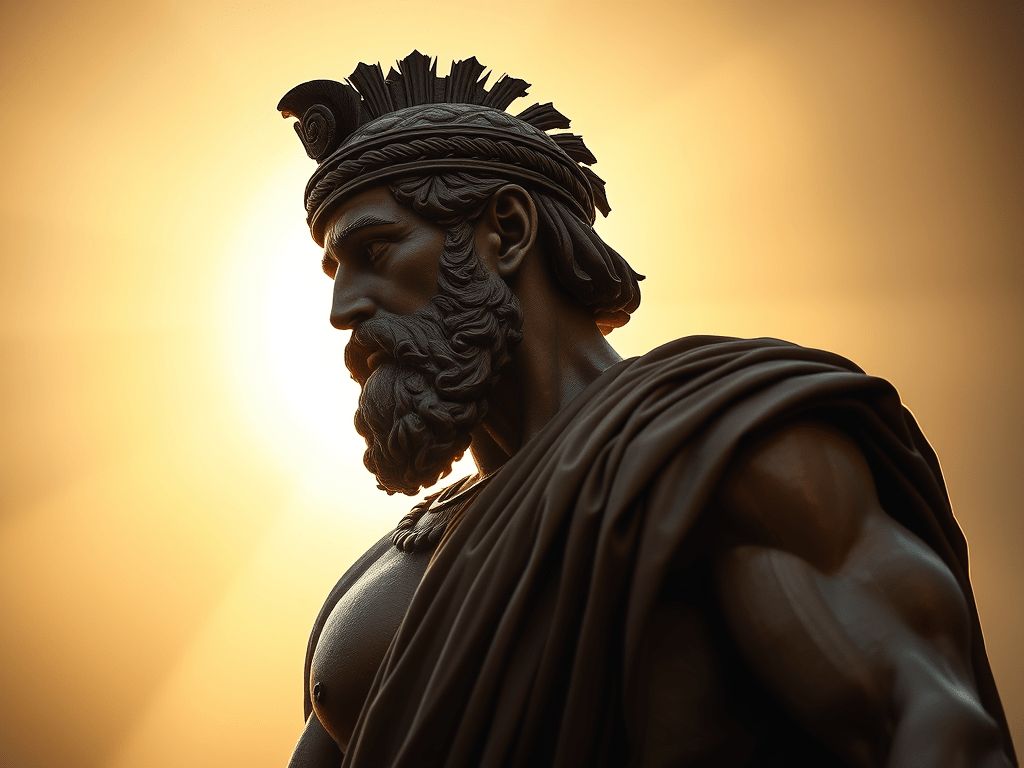
Let’s begin with Hercules, the mythical muscle-bound hero of antiquity. The Stoics looked to the story of Hercules as an example of how to live life. Epictetus would ask his pupils:
“What would have become of Hercules do you think if there had been no lion, hydra, stag or boar – and no savage criminals to rid the world of? What would he have done in the absence of such challenges?
Obviously he would have just rolled over in bed and gone back to sleep. So by snoring his life away in luxury and comfort he never would have developed into the mighty Hercules.
And even if he had, what good would it have done him? What would have been the use of those arms, that physique, and that noble soul, without crises or conditions to stir into him action?”
Above-all else the Stoics cherished the development of what the Greeks called arete. For simplicity, we translate arete to virtue, although something gets lost in translation as virtue has connotations of moral superiority. What the Stoics prized most of all was excellence of character.
To that end, they remind us that adversity is not a curse but a crucible. They emphasize that we cannot control what happens to us, only how we respond. And that response defines and builds our character and our life. Marcus Aurelius captured this sentiment succinctly: “The impediment to action advances action. What stands in the way becomes the way.” Neatly summarized by Ryan Holiday as “the obstacle is the way.”
Sounds Pretty, But What Does It Mean?
The precise meaning behind a phrase so simple – what stands in the way becomes the way – can be multifold.
1. In Robert Frost’s poem titled, “A Servant to Servants” a notable line reads: “He says the best way out is always through.” The pithier “the way out is through” is what we will most often find accredited to Frost. This is the most straightforward interpretation of this powerful reminder from the former emperor. The Stoics accepted that a life without struggles is impossible and attempts to avoid troubles is only likely to cause more trouble. Problems are best tackled head-on as those we do not attend to grow multiple heads like the serpent-like hydra Hercules had to battle. Jean La Fontaine’s fable, “The Deer and the Vine” illustrates this well. A deer that flees deep into the forest to escape hunters gets trapped in some vines. The more the deer struggles, the more tangled it becomes. As La Fontaine states: “A person often meets his destiny on the road he took to avoid it.” The destiny of the one who faces the problems is likely to be preferable to he who sees them multiply through flight.
2. A second-order interpretation of Aurelius’ quote can be condensed to a powerful statement by Greek philosopher Heraclitus: “Character is destiny.” Leaning into challenges will shape our character, and the attributes that develops in us will determine what becomes of us. Epictetus prescribes this attitude towards difficulties when he says: “The true man is revealed in difficult times. So when trouble comes, think of yourself as a wrestler whom God, like a trainer, has paired with a tough young buck. For what purpose? To turn you into Olympic-class material.”
3. A third-order derivative of Aurelius’ quote can be that, when it comes to our levels of stress, our attitude towards difficulties makes all the difference in the world. Aurelius addresses this more directly when he states: “External things are not the problem. It’s your assessment of them. Which you can erase right now.” Elsewhere, he invites us to reconsider and reframe our perceptions: “Things do not touch the soul, for they are external to its movement, but your anguish only comes from judgments within.” This line of thought suggests that anxiety is a choice, and it is greatly influenced by the our attitude towards external events – where one person sees a problem, another can see an opportunity.
The Science of Tenacity
Science cannot empirically prove that the way out is through, there are far too many variables to control in that experiment, however, it is in the second and third-order interpretations of the famous quote – those that emphasize that what doesn’t kill you make you stronger (to paraphrase them in Nietzsche’s words) – where science has proven that the Stoics were right on the mark. Of course, hormesis, the phenomenon by which a low dose of a potentially harmful stressor, such as a toxin or environmental factor, stimulates a beneficial adaptive response in an organism is well established. Everyone who exercises voluntarily suffers and subjects their body to stress for exactly this purpose. However, until recently, the notion that willpower or tenacity can be developed via practice has been the exclusive domain of ancient philosophers and poets.
Two centuries before neuroscience confirmed that adult brains retained plasticity and psychological researchers such as Carol Dweck identified the benefits of a growth mindset, the Stoics, via their insistence that our character is malleable, held the belief that mental abilities can be developed through dedication and hard work. The Stoics urge us not to despair if ever we act with less responsibly, bravery, kindness, or self-control. Our action is not a gauge of who we are by nature, rather, it is an opportunity to redefine the right course and practice it. Through modern science we now know that the Stoic’s approach to obstacles leverages the brain’s ability to reorganize itself by forming new neural connections, enhancing learning and adaptability.
The biological underpinnings of Stoic tenacity are outlined in a recent neuroscience study called The Tenacious Brain: How the Anterior Mid-Cingulate Contributes to Achieving Goals. The study illustrates how a specific brain region – the anterior mid-cingulate cortex (aMCC)—is critical in navigating and overcoming life’s obstacles. Imagine a tiny brain center that sits at a critical junction where your sensory system and your attention systems converge. In this privileged position, it can collect and combine bottom-up information about the state of your body and the external circumstances and top-down information from your cortex about the perceived effort involved in the task and your evaluation of your abilities. The hypothesis of the study’s authors is that the aMCC acts as a central hub for persistence. It conducts a sophisticated cost-benefit analysis of effortful action and decides whether the task is worth the sweat and sacrifice.
This is the brain center that determines if difficulties can become stepping stones toward meaningful achievement. The aMCC is particularly active if we feel frustrated and consider giving up. When this brain region is inactivated or has low-level activity, people tend to be apathetic, unmotivated, and unlikely to make long-term plans. People suffering from depression have less blood flow in the aMCC when performing a demanding task. It’s also highly active when we evaluate competing options or need to focus and get things done. When you persist through a grueling workout, stay late to finish a challenging project, or resist the pull of instant gratification in favor of long-term goals, it’s what inputs your aMCC processes that determines how much grit you demonstrate.
An active aMCC has been shown to correlate with tests of grit and academic performance. The ability to choose healthy foods over junk is associated with higher levels of aMCC activity. It activates when we move when we don’t really want to. The benefits of being hard-headed seem to go beyond just being able to push out extra reps, get good grades, and follow through with New Year’s resolutions. In the short-term, you get a shot of dopamine from overcoming your internal resistance. In the long-term, a heavily ‘muscled’ aMCC might even help prevent cognitive decline. Superagers – elderly people that retain high levels of cognitive function compared to their peers and even compared to young adults – have been shown to have denser aMCC’s that are more connected to other brain regions.
No Pain, No Brain Gains
But, what if you don’t tend towards tenacity? Can you strengthen your brain as you would your biceps?
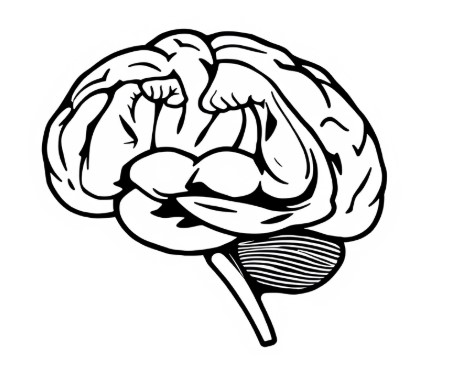
At this time, neuroscience can’t say yet with absolute certainty that a well myelinated and highly networked aMCC is the fruit of choosing to be tenacious. Nonetheless, evidence for brain plasticity in general is abundant. We know that the motor cortex will demonstrate synaptic plasticity (form new neural connections and strengthens existing ones) by practicing the piano, juggling, or throwing a football, or anything involving voluntary movements. Other brain areas are also malleable. For example, chronic stress can lead to the shrinkage of the hippocampus, affecting memory and cognitive function. However, engaging in stress-reducing activities like mindfulness meditation or physical exercise can promote the growth of new neurons and strengthen existing connections, helping the hippocampus recover and adapt. Neuroanatomical studies show that the aMCC has markers for plasticity. And, augmented aMCC functioning with respect to exercise has been shown to occur. It’s smaller in obese people and grows as they persist with a diet, it’s larger in athletes, and grows larger in people that overcome a perceived challenge. It will also shrink if we shrink back from challenges. It would seem that Seneca was on to something when he said: “Hold therefore to this sound and saving rule of life: indulge the body only to the extent that suffices for health. Deal sternly with it, lest it fail to obey the mind.”
So, given this, when I ask my aMCC to do a cost-benefit analysis and determine if the potential payoffs are warranted given the uncertain but promising scientific evidence, it strongly suggests that this is a good deal: This is a muscle I should be flexing more often. Epictetus’ words ring true: “We should discipline ourselves in small things, and from there progress to things of greater value.”
The Good Life
I must admit however, that even if I am a scientist by training, the hard evidence of science is compelling, but the Stoics are even more convincing. Philosophy to them was not about highfalutin theoretical debates. Their primary concern was how to live a good life. As Marcus Aurelius states: “Waste no more time arguing about what a good man should be; just be one.” Or Seneca: “These logicians think they’re accomplishing something…” Philosophy to them was about experimenting on how to live a good life and contemplation was to be directed at the best way to live. The Stoics pointed to the tale of Hercules not just as an example of how to respond virtuously to challenges and develop character but also because it is a guide to the good life. A good life and an easy one are entirely different things in their estimation. The following extract from Donald Robertson’s excellent book How to Think Like A Roman Emperor illustrates the point exceptionally well:
“Apparently, before he became our mythic hero, Hercules was walking on a path and came to a fork in the road. At which point two goddesses appeared. One barged in front of the other and falsely claimed that her friends called her Eudaimonia. (Her real name was Vice.) She promised Hercules a life of ease and luxury without any hardships. The second goddess, Arete, was “a less boastful and more modest woman, who nonetheless shone with natural beauty. To his surprise, she wore a grave expression. She warned him that her path led in a very different direction: it would be long and difficult, and would require a great deal of hard work. Speaking plainly, she told Hercules that he would suffer. … ‘Nothing that is really good and admirable,’ cautioned Arete, ‘is granted by the gods to men without some effort and application.’ Hercules would be called upon to exercise wisdom and justice and to face mounting adversity with bravery and self-discipline. Overcoming great obstacles through courageous and honorable deeds, the goddess said, was the only true path to fulfillment in life.”
This is, I think, the ultimate meaning behind Marcus’ reminder that the obstacle is the way. It is what I call the E=mc2 of life. Science is showing us that leaning into hard things can make you a muscehead. It will strengthen your brain – building character traits such as tenacity and resilience. Character development and striving towards meaningful objectives will bring fulfillment. It’s not about what’s in the way: it’s about what and who is on the other side. The ultimate reason why what stands in the way becomes the way is best summarized in the following statement from Randy Paush, from The Last Lecture:
“The brick walls are there for a reason. The brick walls are not there to keep us out. The brick walls are there to give us a chance to show how badly we want something. Because the brick walls are there to stop the people who don’t want it badly enough. They’re there to stop the other people.”
.
K. Wilkins is the author of:
Stoic Virtues Journal: Your Guide to Becoming the Person You Aspire to Be
Rules for Living Journal: Life Advice Based On the Words and Wisdom of Jordan B. Peterson
References:
2. Much thanks to Andrew Huberman for bringing the aMCC into focus during these episodes over the last year: https://www.hubermanlab.com/episode/how-to-use-exercise-to-improve-your-brains-health-longevity-performance, https://www.hubermanlab.com/episode/david-goggins-how-to-build-immense-inner-strength
 Find Your Journal