

The quality of any advice anybody has to offer has to be judged against the quality of life they actually lead.
Douglas Adams
I was amused yesterday morning to see that a conversation between two of the world’s most popular psychologists, Jordan Peterson and Dr. Phil, was in my list of recommended podcasts. I don’t know that official numbers as to who has a bigger audience. I would assume that with his decades on TV that it would be Dr. Phil. Although, if it’s overall attention and we count his many detractors, Peterson may have the edge. Either way, that’s unimportant, they have both been very successful at bringing psychology to the masses.
Unfortunately, popularity can erode credibility. A case-in-point: It is not uncommon for me to dismiss a book that is wildly popular – my reflex is to assume that it is dumbed-down. While it might be a good rule of thumb, a thumb is a very crude measuring stick. We must always remember that in the middle ages an “ynche” was the breadth of a man’s thumb at the base of the nail. If I rely on better instruments when working with wood, when it come sto building a base of knowledge, this heuristic might be helpful, but be inadequate.
Decades ago I would occasionally be home from university and saunter through the living room as my mother watched Oprah. Oftentimes I liked her and her guest, but I would not admit it to myself, even when it was evident that Oprah is engaging, smart, and really good at what she does.The same is true of the guest appearances of Dr. Phil. on her show. I judged the book on its cover. This was daytime TV, pop psychology, and on Oprah to boot – definitely not my demographic (Mom yes, not me). I was in university, my classes talked of the id, the ego, the superego, and personality theories. I would tell myself that my lingering in the living room was just to be amused by the quackery (which is completely laughable given he has a PhD and a successful practice and I had what to boast? A High School diploma and a little league soccer trophy…).
I soon could not deny that he was not just a good entertainer, he was entertaining because he was good. I think this became evident in one of the very first episodes. I watched as a guest went through a litany of problems and described a life in shambles. I couldn’t imagine where one would begin to offer advice to this hopeless soul. Dr. Phil looked them squarely in the eyes and asked: “Just how bad do things have to get until you decide to do something about it?” This stung. Perhaps I was expecting sympathy for their plight. I was in my early twenties, in my mind people ‘had’ problems because they didn’t have solutions. Hence my default position that his job was to provide advice and have pity. Instead he offered perspective instead of sympathy. It was tough love, but necessary. He reframed the situation: in part, they may lack solutions because they can’t see that they are the problem.
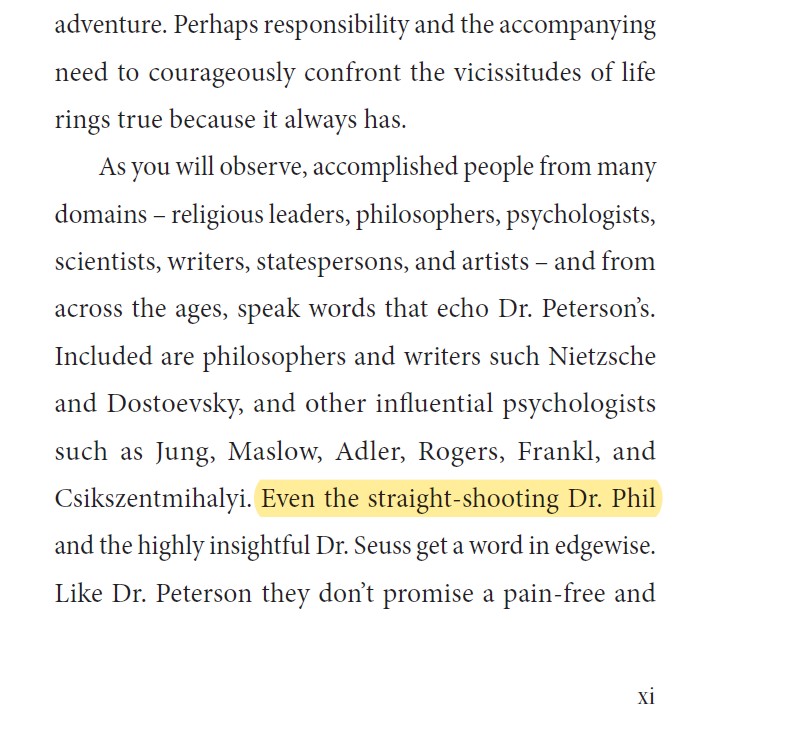
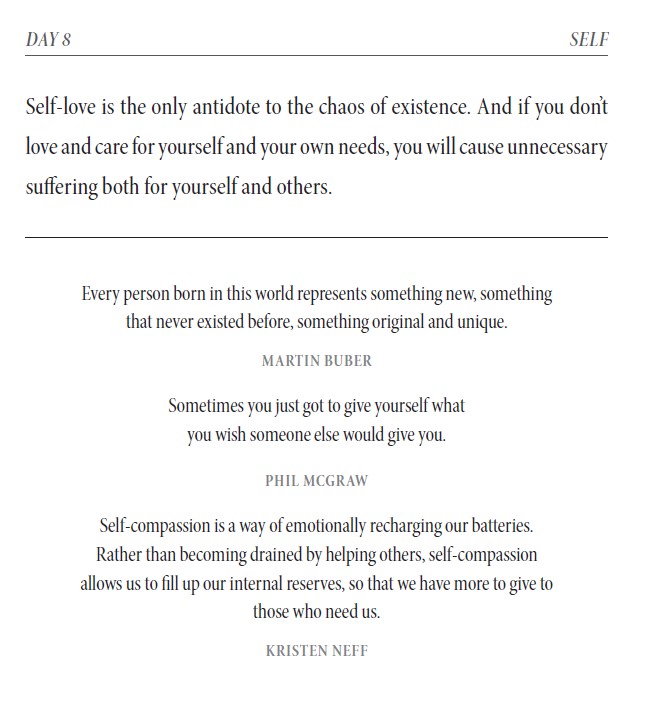
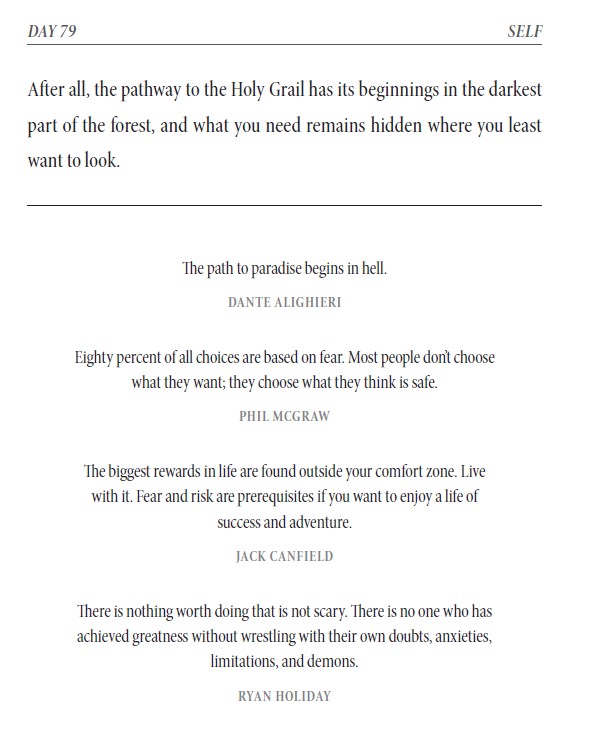
When I put the Rules for Living Journal together to celebrate the work of Jordan Peterson I often paired his words with the great psychologists of the last century – Jung, Maslow, May, Fromm, Adler, Frankl, to name a few – but I also included McGraw as both are straight shooters that remind people that when you point at someone or something there are three fingers pointing back at you.
It therefore came as no surprise that the ten chapters in Dr. Phil’s latest book We’ve Got Issues seemed to dovetail nicely with Peterson’s twelve rules. They cover quite a lot of ground in the podcast as they delve into the themes in Dr. Phil’s book, jumping from individual psychology to social psychology. Two notable moments for me from each domain were:
Social psychology
Dr. Phil’s quip, “I’d rather have questions that I can’t answer than answers that I can’t question.” says it all.
Personal psychology
Their musings on the difficulties they’ve had getting some mentally ill patients to let go of irrational and unhelpful beliefs is particularly interesting. Jordan brings up the story of Exodus. He notes that escaping tyranny led to 40 years in the desert – things got worse before they got better. Most importantly, those were years of wandering. Dr. Phil astutely adds (based on his expertise in the judicial and the clinical realm) that what people really need most is an alternative belief that is plausible. How often do we resist change because of the uncertainty that will ensue? Our bad situation might be uncomfortable, but it may be tolerable because it is at least predictable. We cling to certainty. This also provides clues as to why Dr. Phil’s guest from decades ago could stay idle as their life got progressively worse.
These are insights that we all could benefit from. I know of nobody (myself included) who could not ask if they are clinging to certainty or afraid of asking hard questions at some level. The paradox here is that both deplore how many embrace superficial identities that box us in and thus prevent growth and learning. How many don’t listen or read either of them because of their popularity (are you listening former me?)? Popular often translates into unsophisticated, but the two are not mutually exclusive and there are many other examples that prove that. More importantly, how many will pay no heed because it’s not their demographic (or psychographic to be modern) or because it threatens their identity?
Both of these psychologists stress the need to be a builder and prod ye who criticizes to come to the table with viable alternatives and contribute rather than just tear things down. One thing I’ve learned so far is not to dismiss the lessons that anyone can teach me. This is especially true if the speaker has had more success (which can be defined in numerous ways – material, professional, spiritual, relational) across any dimension than I have. Popularity is neither a great measure of success nor the most virtuous aim to pursue, but both of these psychologists gained their popularity and their success through the dogged pursuit of knowledge and understanding – that seems to be a better rule-of-thumb when determining who to pay attention to: look at what they’ve built what it’s built upon.
K. Wilkins is the author of:
Stoic Virtues Journal: Your Guide to Becoming the Person You Aspire to Be
Rules for Living Journal: Life Advice Based On the Words and Wisdom of Jordan B. Peterson
Three excerpts from the Rules for Living Journal:
 Find Your Journal