
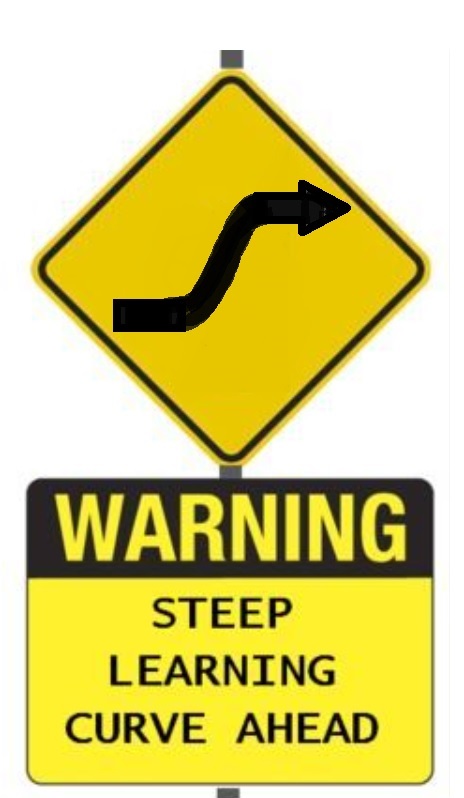
As a trained environment, health, and safety specialist, this is hard to admit. It feels odd, but it also feels right.
We like to say, and we like to hear it. But it’s B.S. It never really has been true, and it never will. We could make it true. It’s a question of choice. Then again, maybe we shouldn’t.
In any organization, in any endeavour, in any life, if we want safety, there is always a way. Do nothing. Say nothing. The result is that nobody will get hurt. Shut the whole place down. Zero risk. [Sorry, not true; a meteorite could come crashing through the ceiling at any moment and destroy you and your couch. Tragically, this will also spill all the beer and pretzels. So, I stand corrected: minimal risk.] But then again, nobody will get paid, nothing will get done, and nothing will happen. All reward comes with risk, all pay is danger pay.
Our hearts are in the right place when we say that it’s safety first, but the truth is otherwise, for we always value something else slightly more. In the industrial context, if there are no profits, there’s no company. That rings truer. That also mean that we accept some level of risk.
To be blunt, a ‘safety first’ culture is in my mind somewhat toxic. I say that because of this inherent dishonesty. Do you want to be part of an organization that lies to you?
If we are speaking at the level of the individual, it’s fooling one’s self – equally toxic. The lie may be comforting, but if you need comfort more than anything, something is way out of tune. You do leave the (relative) safety of your couch at times – there is a reason, a higher calling. If there’s no adventure, no personal psychodrama, there’s no life. That rings truer than living vicariously through the tube.
Thus, safety does not come first anywhere or for anyone. I cannot guarantee you safety. The truth is that I am not your mother. It is not my job to protect you. There are no skirts out there to hide behind. Sorry to disabuse you of any misgivings you may have had, but that’s simply not my role. And it’s not hers either. Your job is not to prepare the path for the child, it is to prepare the child for the path. (I’ve seen this credited to psychologist Carol Dweck, who, aptly, wrote the bible for those wishing to develop a growth mindset: Mindset. The premise of that book in a few words: Get comfortable being uncomfortable.)
I am anti-safety-first as a parent, teacher, leader, and as a coach.
As a father, my daughter recently texted me when she was experiencing a personal dilemma. Something involving different friends and conflicting commitments. To my surprise, several messages into the thread she asked, ‘what should I do?’ Of course, I knew exactly what to do. I have an additional three decades of life experience. I can think through competing priorities and interpersonal dramas more clearly because I’ve been there before. A part of my wanted to seize the opportunity, be the heroic Dad that eases her pain and provides protection. And there is a fringe benefit: If I’m helpful, she’ll come back for advice later in life, when she has real big-person problems. That would be awesome, I do not want to blunt that reflex. (At the same age, I would never have even contemplated asking a parent or anyone older for advice – the only thing I’d dare request was a second helping of supper and the keys to the family cruiser.) So I told her what she need to hear, that I don’t know, that it was her problem, not mine. Yes, I lied (in part). All I could do was ask one or two open questions to help her reframe it and get some perspective (hopefully, it was enough input to encourage her to see the value in dialogue as a problem-solving method, and enough restraint to not rob her of ‘her’ experience). Then I cut the tether. [The benefit of this technology is the ability to help if they are truly in danger is augmented. The problem, is that sometimes the umbilical cord never gets severed.]
In my early days as a manger, I worked late into the night, making sure I was on top of everything. Not only do I not even recall what on Earth was accomplished by that bleary-eyed workaholic, nor does anyone else. And rightly so, while I was a great employee, I was a lousy boss.
I once heard a management guru talk about a modern organization as a canoe or a boat with ten people in it. He said that three people are up front paddling hard, five are along for the ride, barely dipping an oar in the water, two are actively paddling backwards. So, given that the disgruntled would rate Jesus poorly, my best possible approval rating would have been 8 out of 10. Having lived what the top performers experienced, I know that I didn’t deserve their unequivocal support either. So, the best grade I could get would have been a pass, sixty percent – if I count my own vote. The five drifters would naturally find me great, who wouldn’t? I was doing their job. I didn’t learn to manage until I learned to let go. Until I learned to coach people to get comfortable up here in the front of the boat, or politely show them where we offload deadweight, I wasn’t really a leader. I may have felt like a hero as I kept my crew safe and warm, but I was as much a villain – I was stealing opportunity from them, and delaying learning that I desperately needed.
As a coach*, my role is to guide and facilitate. My job is not to provide anyone with solutions. That would take their problem away from them – and that’s a bigger problem. They own it, all of it; it has to be that way. I have enough of my own. A critical role of the coach is to help them clarify the problem. As John Ruskin has said: To be able to ask a question clearly is two-thirds of the way to getting it answered. That often means finding a better question, for, there is always a question under the question. That’s because there’s invariably a deeper problem lurking under the surface of the problem at hand. Going there is dangerous, we find things down there that we may have rather left alone. So the choice we land on in a coaching session is often between doing the safe and easy thing and the right thing.
Thus, as a parent, as a leader, and as a coach, I can assure you that it will be uncomfortable. You will not be entirely safe. That’s a promise. But you’re inevitably walking a path or looking for one because there’s something of value at the end of the rainbow. It might not be a pot of gold, maybe the path never ends, maybe the voyage is nothing more than the happiness of pursuit. There might be dangers, there will be discomfort as we per ahead at dark and shadowy sections ahead. Yet we will forge ahead despite our discomfort – maybe even because of it. It is not a safe place we’re looking for, we’re aiming at becoming a stronger and a better traveler. The fact is that nobody ever leaned a damn thing in their comfort zone. So I won’t provide you with one. I may even shove you out of it. Sorry. But safety is not my first priority. Growth and learning supersedes safety. That’s what (fill in the blank: this family, organization, our species, this life, my personal philosophy – take your pick, add your own…) is all about.
And yes, in all that, dignity and respect. Above all, you are a person and are valued and accepted for who you are now and who you could be. It’s because who you could be is part of who you are, I cannot guarantee your safety. (If safety means no discomfort – as it is wont to be defined these days). Two paths lie before us. The question under the question is (to make a corny paraphrase): ‘Should I stay or should I grow?’ It’s your choice – every time.
K. Wilkins is the author of:
Stoic Virtues Journal: Your Guide to Becoming the Person You Aspire to Be
Rules for Living Journal: Life Advice Based On the Words and Wisdom of Jordan B. Peterson
* Studying for International Coaching Federation (ICF) certification
 Find Your Journal